Posted by Maleeha Mir on 18 March 2026, in Event reports, News, Showcase
Photos by Maleeha Mir & Kay Lacey, Words by Chris Russell
You can listen to the complete audio recording of this event via this link.
During the closing hours of the 2026 London Book Fair, Byte The Book gathered a panel of industry experts to explore the increasingly diverse ways in which authors can deliver their work to readers. The discussion brought together IngramSpark Director Paige Allen, Bookouture’s Laura Deacon, literary agent James Wills and Kobo’s Ashleigh Gardner (VP of self-publishing and Kobo originals) for a deep dive into how today’s authors can navigate traditional, independent and hybrid routes through this ever-changing industry.

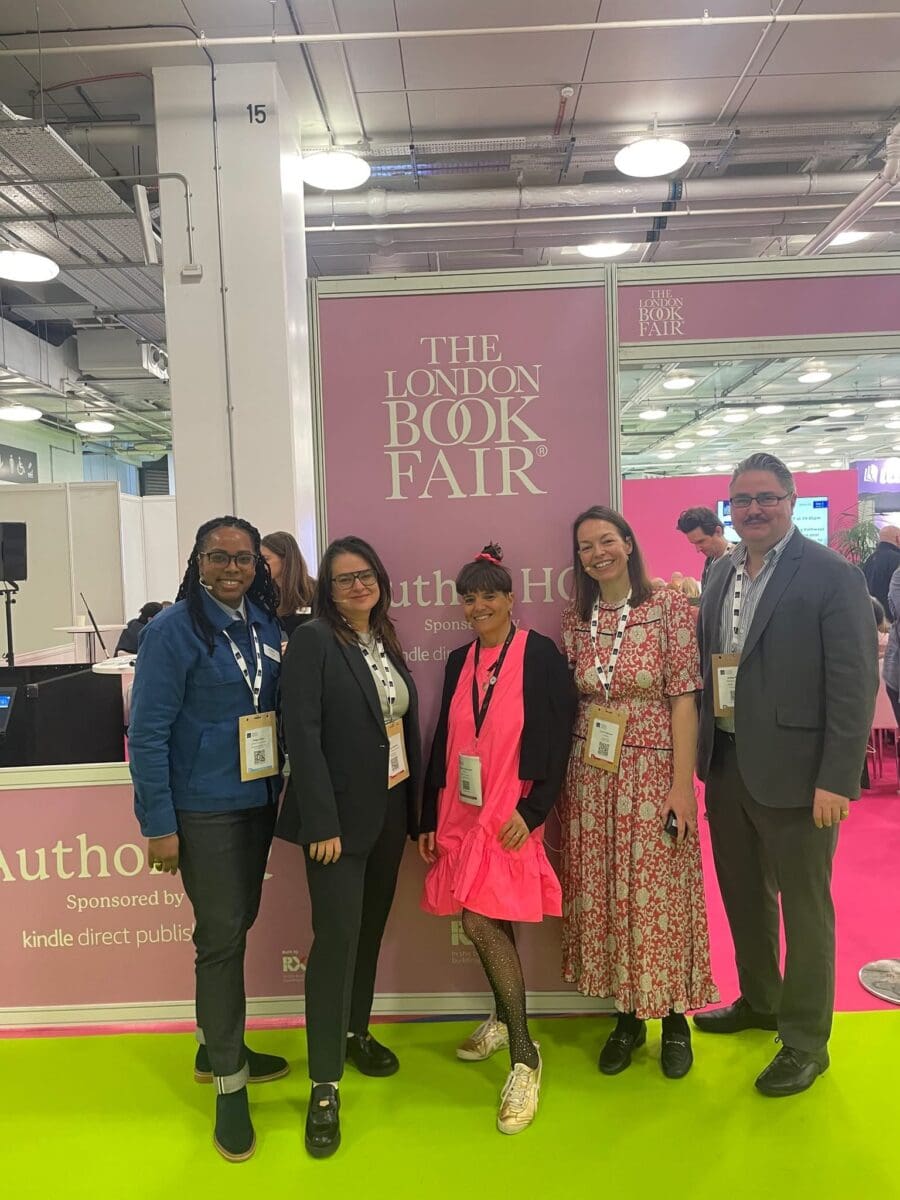
Our panel from left to right: Ashleigh Gardner, Paige Allen, Justine Solomons, Laura Deacon and James Wills.
Byte founder Justine Solomons opened the floor by asking each panellist to describe their role in bringing books to market. As a publisher at Bookouture, one of the UK’s most dynamic and forward-facing imprints, Laura laid out her company’s unusually open submissions policy. “Only around half of our authors are agented,” she began, “and the other half submit directly. Everyone gets a response within two weeks, which is rare”. Upon accepting manuscripts for publication, Bookouture also offer authors extremely competitive royalty rates – 45% on both eBooks and audiobooks – although this does come at the expense of an advance.
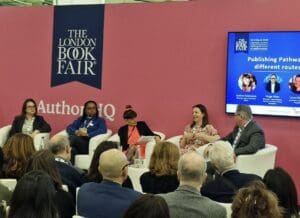
Both Ashleigh and Paige touched on how their employers, Kobo and IngramSpark, are shifting power back to authors by circumventing historical gatekeeping structures. “I don’t think there’s ever been a better time to self-publish,” commented Ashleigh, in reference to the nimble pace at which independent authors can move. “Indie writers are able to respond quickly to industry trends, instead of being held back by traditional publishers dragging their feet”.
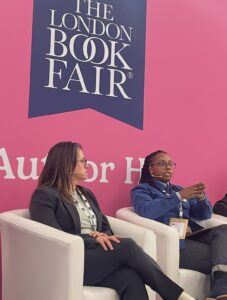
James Wills – whose literary agency Watson, Little could be said to represent the very gatekeeping on trial – praised the dynamism of brands like Bookouture, but pointed out that even in a constantly evolving publishing landscape, the role of the literary agent remains a crucial one. “For the majority of publishers, you still need to go through an agent,” he argued. “That might make us seem like scary gatekeepers, but we do love books and are genuinely looking for the next great writer to represent”. In addition, he said, most agents do more than simply submitting manuscripts, with many providing valuable editorial guidance for their clients.
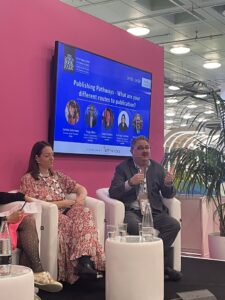
If access to market is becoming easier by the day, then, what are the real roadblocks for aspiring authors in the modern era? “Discoverability,” answered Ashleigh, without hesitation. In a saturated marketplace, finding an audience has replaced finding a publisher as an author’s biggest challenge, but in tandem with social media, platforms such as Substack can help writers build a direct relationship with readers. “It is often easier to sell 100 books to an existing fanbase of 1,000 readers,” she suggested, “than to persuade 100 completely new readers to take a chance on your book”. Picking up on this, Laura cited Bookouture’s data-driven approach as an antidote to industry saturation. “We use data in a very interesting way, looking at wider market trends,” she revealed, “and at every point of the publication process, we measure how readers are responding to the cover and copy. If we can improve those elements on the fly, we do”. IngramSpark follow a similar path, noted Paige, constantly optimizing meta data to strengthen keywords and categorization, helping search engines to highlight their titles to relevant readers.

As always, the spectre of AI was never far away, and the event concluded with a candid discussion around whether artificial intelligence is primarily a tool, or a threat. Ashleigh reminded the audience that AI is “not just one thing” – less a single technology and more a suite of tools that can assist authors in various different ways, whether that’s in editing, translation or audiobook narration (services which have long been prohibitively expensive for independent authors). Paige said of AI that it “isn’t intelligence, it’s amplification, boosting creativity for those who use it. It’s a power tool that enhances your productivity or precision, but it can’t replace or remove the craftmanship”.

Thank you to London Book Fair for hosting our event at Author HQ!
You can find many more photos from this panel from our online album 'London Book Fair 2026: Publishing Pathways - What are your Different Routes to Publication?' here!
If you're not already a member of Byte The Book you can join us from £30 a month here.