Rebekah Lattin-Rawstrone reviews and recommends Unmastered: A Book On Desire, Most Difficult to Tell by Katherine Angel
I loved this book. At first, I was taken aback by all the space; there is an aphoristic feel to the style, to the layout and there are many quotations from Susan Sontag and Virginia Woolf in particular. Was I reading a compilation of other people’s thoughts? Sometimes the simple clarity of the prose knocked me off guard. What was I reading? What would this book give me?
Then, as I read on, I found myself delighting in the space, embracing all that room for contemplation that the book gave to these simple, difficult words about female desire. I say difficult because, as the book explores, discussing female desire is fraught with conditioned expectations, dichotomies of interpretation, a fear of how it will be interpreted and a culture that prefers women to stay silent about their desire. A woman full of desire, a woman hungry for sexual experience or to be in charge of her sexual experience, a woman who refuses to be good, to be compliant, is threatening. It is far easier to stay silent.
This hunger, this desire to consume and explore, to gorge on pleasure, to take centre stage, is at the heart of a feminism that is all about owning every part of a woman, even the desires that play with misogyny, that sit at the painful edge of a cultural shift away from patriarchy that we are still very much in the middle of.
Unmastered is a totally engrossing read. I know I will go back and back to it. I’ve turned down so many pages the book now has that fan quality, its edges ready to be unfurled, ready to fuel my own thoughts.
Go Katherine Angel! Recommended by another wonderful author, Heidi James, you can buy Unmastered here.
If you would like to read more of Rebekah's reviews, head to her blog to find out what she's been reading.
Rebekah Lattin-Rawstrone reviews and recommends White by Marie Darrieussecq
Edmeé and Pete have never met. They come from separate parts of the globe, but White follows their individual journeys to Antarctica and each other.
Why do you sign up for a job in such freezing conditions if you are not a scientist or adventurer seeking some new discovery? What is it that Edmeé and Pete want from the ice and snow, from the endless whiteness that splits champagne bottles in half and requires constant vigilance against for survival?
Pete is the generator engineer. Everyone relies on his ability to keep that generator going.
Edmeé works the radio. She is the only woman at the station.
Over the days and weeks, the hours of endless daylight, the ghosts of the past linger in the whiteness of the Antarctic seeking the heart beats and emotions of the living. Looking for ways to enliven themselves, seeing connections before those they inhabit can.
Both Edmeé and Pete have come the Antarctic to leave something behind, to find an anonymity and silence that they then struggle to find in a cramped, sweaty, camp.
Pete is Icelandic but of Indian heritage and Edmeé is a French Canadian married to an American. Both of them have had strange childhoods filled with unspoken abandonments that cloud in on them in the biting air of the Antarctic.
Every time I read Marie Darrieussecq I’m struck by how beautifully she weaves her words and ideas. There is an economy to her writing that allows huge amounts to be said through the description of every day events – the drudge of fixing and connecting machinery, the necessity of food. Though the Antarctic is not an environment of the everyday, it is if you have to live it and this white out speaks with the many voices of memory both across that frozen sea and individually for Edmeé and Pete. You have to pay attention to see the edges and seeds of their adult struggle and that attention is delightfully rewarded. To be able to express so much in such a short book is something to aspire to. I loved White. You’ll know if this kind of writing is for you. If it is, you can buy the book here.
If you would like to read more of Rebekah's reviews, head to her blog to find out what she's been reading.
When we sat down to watch Britain’s Got Talent, babbling laughter and beat-thump rock tunes came pumping through the wall.
‘Go easy, Ben,’ Mum smiled. ‘Admit it, his taste in music’s not half bad for a guy who wears flip-flops.’
That irritated Dad. ‘Tit. He’s drowning out the singing.’ He pointed to the tele.
‘Just go round. Tell him, Turn it down.’
Dad got on his feet and began striding up and down, muttering, ‘Why’s he doing this to me?’
‘Ben, he’s having friends over. Let’s go out for a drink.’
‘I will NOT be drummed out of my castle by Numb-Nuts next door!’
‘No one’s drumming. Honestly,’ Mum laughed lightly. ‘We’ve not heard a squeak off him. Have we, Hann?’ I shook my head. ‘He works shifts. It’s a wonder he’s never complained about the noise we make in the daytimes.’
Dad wasn’t listening. He crossed the rug and pounded the wall with both fists. The music carried on and on. He picked up a cushion, lobbed it against the wall and thundered out.
The music took a dip. Voices out front. I looked at Mum. She nibbled her lip. Then a door slammed and the music ramped up but no sign of Dad.
‘Think he’s joined the party?’ I joked.
I dreamt about giant clocks, ticking, and woke to Mr Neighbour, hammering on the front door. I opened up and found him there, standing in his work clothes. His head was tilted back and his Adam’s apple stuck out like an elbow joint.
‘This belong to you?’ He thrust a plastic bag towards me, opened out with both hands. His whole body
trembled and I gasped, pulling back. There was rot and eyes and silver. I spotted five fish heads in the split second before the vile smell gripped me by the throat.
Mum appeared in her dressing gown.
‘This belong to you?’ Mr Neighbour looked at Mum this time. His eyes bulged, huge.
Mum stared into the bag and covered her mouth.
‘Your father, he’s inside there now?’ he asked, turning to me. Fish blood dripped through the air holes onto the doorstep.
‘What do you have to say?’
I looked at the blood spots on the floor, soaked in, spidery splodges. I looked up at his ID badge, the picture of his face, smiling.
‘NHS,’ I read, aloud. ‘So, you’re Doctor Numb-Nuts, then?’
‘Let me keep this brief,’ he said coolly, moving his head like a pigeon. ‘Somebody posted
these fishes through my letterbox in the night. You can tell your father I am this close – ’
He held up a tiny gap between his thumb and finger, narrow as a whisper.
‘– this close to calling the police.’ And with that, he disappeared inside his house.
‘Now that, Hann,’ Dad told me later, ‘is how we wage war without getting our hands dirty.’
And we watched the doctor through my bedroom window, rubbing stains into concrete with a dishcloth.
If you are interested in showcasing one of your short stories please get in touch at info@bytethebook.com
This month was a special Flash Fiction Byte Shorts Showcase in collaboration with Lucy Writers, an online platform showcasing the very best writing and art work from women and non-binary creatives all over the world. In collaboration with Lucy Cavendish College, University of Cambridge, the platform brings together Lucy students, alumnae and fellows, as well as creatives from outside the college community. Lucy Writers welcomes submissions from women and non-binary writers irrespective of whether they’re an established or new-to-the-writing-desk writer. We want to hear from you; let Lucy Writers be the space, room and home for your words. Emily Slade's story, 'A Very British Rebellion' is the winner of their Flash Fiction Competition 2019. Visit Lucy Writers for more information and submission guidelines. Normal submissions to Byte Shorts Showcase are done by getting in touch with us at info@bytethebook.com
Emily Slade (pictured above - image copyright Dougal Waters) is a singer-songwriter from North Hertfordshire. She completed a Masters in Creative Writing at Lucy Cavendish College, Cambridge in 2018. Emily's currently working on her first piece of young adult fiction, Don't Tell, a novel about a teenager trying to reconcile her love and fear for her dad, who has bipolar disorder.
Writer friends and Byte the Book members Emily Midorikawa and Emma Claire Sweeney are the authors of A Secret Sisterhood: The hidden friendships of Austen, Brontë, Eliot and Woolf published by Aurum Press in the UK and Houghton Mifflin Harcourt in the USA.. This is their first non-fiction project and their article shares with us their journey through the non-fiction book proposal process.
Back in 2014, when we launched our literary website, SomethingRhymed.com, we wanted to uncover female writer friends of the past and we set ourselves a target to publish a blog post about one pair each month.
We had assumed that this would prove a challenge since very little had been written about these relationships. We knew all about Byron and Shelley, Hemingway and Fitzgerald but struggled to name the female writers to whom Austen and Eliot had turned for support.
But, with help from the suggestions of our readers, we came across so many fascinating stories of female solidarity that we have kept the site going all these years. The more we became interested in some of these friendships the deeper we delved, and readers of SomethingRhymed.com encouraged us that our discoveries warranted exploration in a full-length book.
Having experienced the long gestation period from initial idea to publication of a novel, we were attracted to the idea of selling a non-fiction book on just sample chapters and proposal.
But the process of writing the proposal proved far more arduous than we had predicted. On the last count it had gone through 25 drafts. This is perhaps unsurprising, since we had never read a book proposal until we found ourselves needing to write one.
Our first port of call was writer friends who’d already been commissioned to write non-fiction books. They kindly sent us copies of their successful proposals, and our agents also showed us some comparable examples. The vast differences leapt out at us, so we ended up picking and choosing the elements that would work best for our project.
Our proposal for A Secret Sisterhood: The hidden friendships of Austen, Brontë, Eliot and Woolf ended up comprising the following sections, which we hope might prove a useful guide for those of you considering a non-fiction proposal:
Synopsis
500 words in which we summarised the idea for the book.
List of Contents
Including hyperlinked page numbers for the convenience of editors.
Chapter plan
- A paragraph that outlines the book’s projected word count, along with a breakdown of the chapter lengths
- The working title of each chapter
- A one line italicized summary of each chapter’s contents, making it sound as marketable as possible
- A 300-word account of the expected contents of each chapter
- We included photographs throughout, which proved a good starting point when our editor asked us for images to include in the plate section.
Sample Chapter(s)
For UK submissions we included one full sample chapter but for the US we were advised to include at least two.
Why Now?
We included 500 words on why the time was ripe for a book on this subject. We had a lot to talk about since Jane Austen, the Brontë sisters, George Eliot and Virginia Woolf all had anniversaries coming up. But this section may well be shorter in other proposals.
Competition and Market
250 words on the market we saw for this book and what made it similar and different from other books on the subject.
Comparable Titles
We spent a lot of time thinking about this since it would affect how the book was positioned. We didn’t want it to be mistaken for an academic book when we wanted to write accessible yet well-researched mass-market non-fiction. Top tip: ask your agent to look up the Nielsen book sales figures for your proposed comparable titles. We were surprised to find that books we’d seen everywhere hadn’t always done so well, and there was also a marked contrast in the US and UK markets.
Sources
A paragraph or two on where you will find the materials to complete your book. We had only conducted the secondary research in advance of submitting the proposal, but we already knew that the original research would take us to several county records offices and museums across the country, and that we would need to visit archives in the USA.
Delivery
Think carefully about this. The date we came up with was exactly the date on which we had to deliver the manuscript and there was absolutely no wriggle room.
Publicity Ideas
Time put into this section will save time later. The five main ideas we came up with here are all things we are now doing to promote the book.
Why Us?
A couple of paragraphs about why we were best placed to write this book.
Biographies
About 150 words on each of us, highlighting our most significant writing achievements and our relevant experience as academic researchers and bloggers.
Between the two of us, our agents and their assistants, a lot of people had input into the document before it went out on submission. But publishers turned out not to be keen on our original idea to include fourteen pairs of writer friends with one chapter devoted to each. Editors complained that some of the writers weren't sufficiently well known.
We began to wonder whether all of the work we had ploughed into the proposal had been worth the effort. But we chivvied each other on, and returned to the proposal, this time including only four celebrated writers and their literary friends. Three chapters would be dedicated to each pair, allowing for greater depth.
We look back and feel so thankful that we went for depth over breadth. And yet we also feel regretful that we weren't able to shine a light on some of the neglected writers we'd included in the original proposal - especially writers of colour and writers with disabilities. In the process of attempting to publish the silenced stories of female literary friendships, some stories remain untold. We can only hope that soon the industry will lend an ear.
Have a look at their Byte the Book Hub entries to find out more about Emma and Emily. You can also read our review of A Secret Sisterhood here and you can buy the book here. We’ve also reviewed Emma Claire Sweeney’s Owl Song At Dawn. Do have a look here.
Words by Chris Russell, photos by Katrina Hopewell.
Returning to its former home at Soho’s prestigious Club at the Ivy, Byte The Book welcomed a varied panel of industry experts for the first of its April events. Steve Connolly (Digital Director, Hodder Education), Andy Blustin (Head of Business Development, Digital Partnerships, BBC Worldwide), Susan Bolsover (Licensing and Consumer Products Director, Penguin Random House) and Jason Haynes (Head of Business to Business Enablers, Vodafone) gathered to discuss how publishers can find hidden treasure in their content, chaired by editor-in-chief of Publishing Perspectives, Porter Anderson and sponsored by Ixxus and the Copyright Clearance Center.
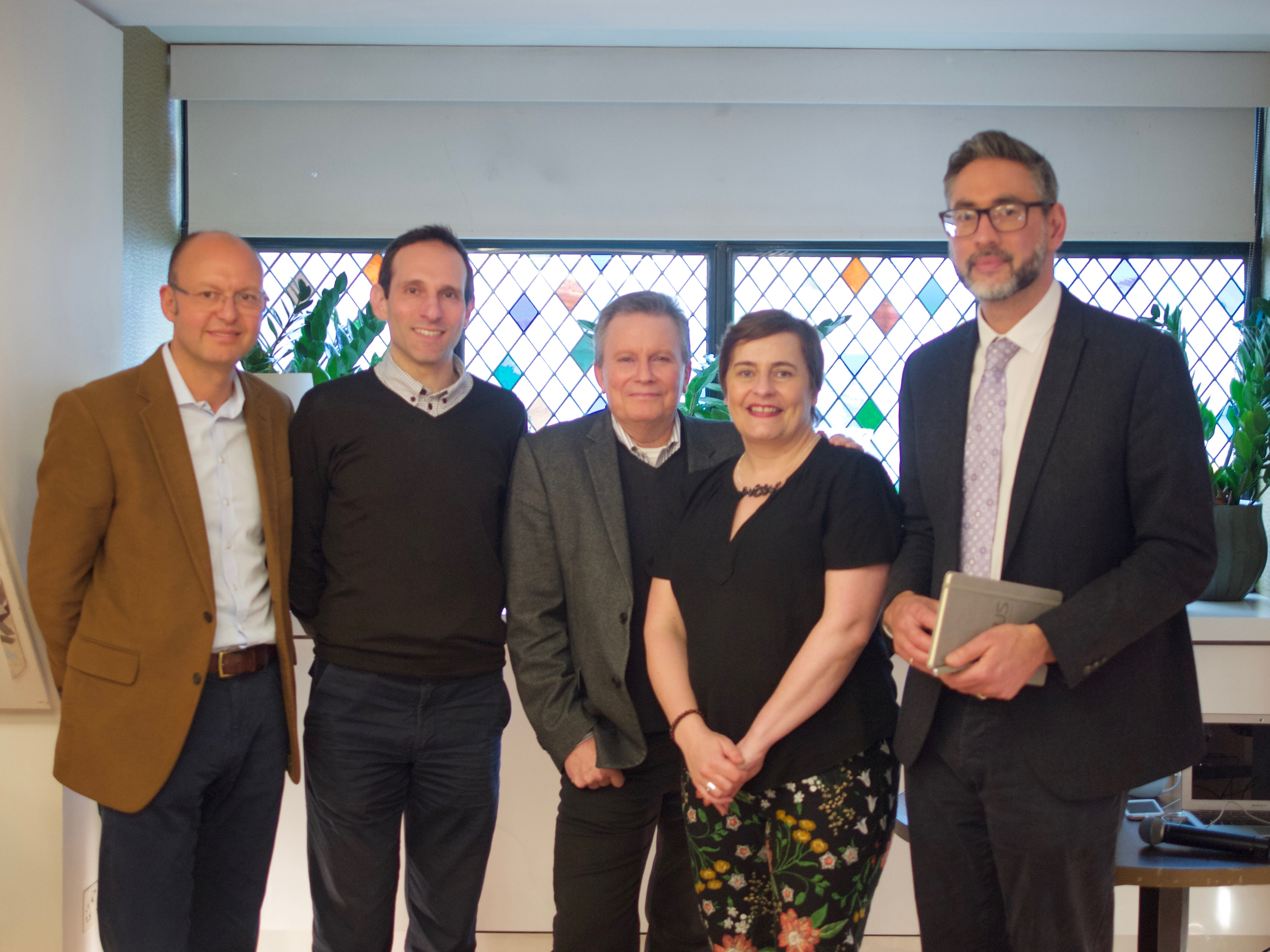
The illustrious panel in front of the iconic Ivy windows (left to right): Jason Haynes, Andy Blustin, Porter Anderson, Susan Bolsover and Steve Connolly.
Porter opened the floor with a quote from author, producer and Byte The Book member Jeff Norton: “TV is now the dominant medium of culture.” This, said Porter, was pretty much indisputable, but what does it mean for the publishing industry? Susan Bolsover, who spent ten years working for film studios and TV production companies before joining the licensing department at Penguin Random House, argued that despite the continuing dominance of television, publishers are “the last bastion of great content” and have a “unique talent for spotting great storytelling”. The challenge for publishing companies, she said, is to find new and innovative ways of communicating those stories, so we don’t get left behind. “Many of you in this room might be horrified at the idea of branded lunch boxes and duvets,” she pondered, “but when people love a brand, they want to connect with it in multiple ways.”
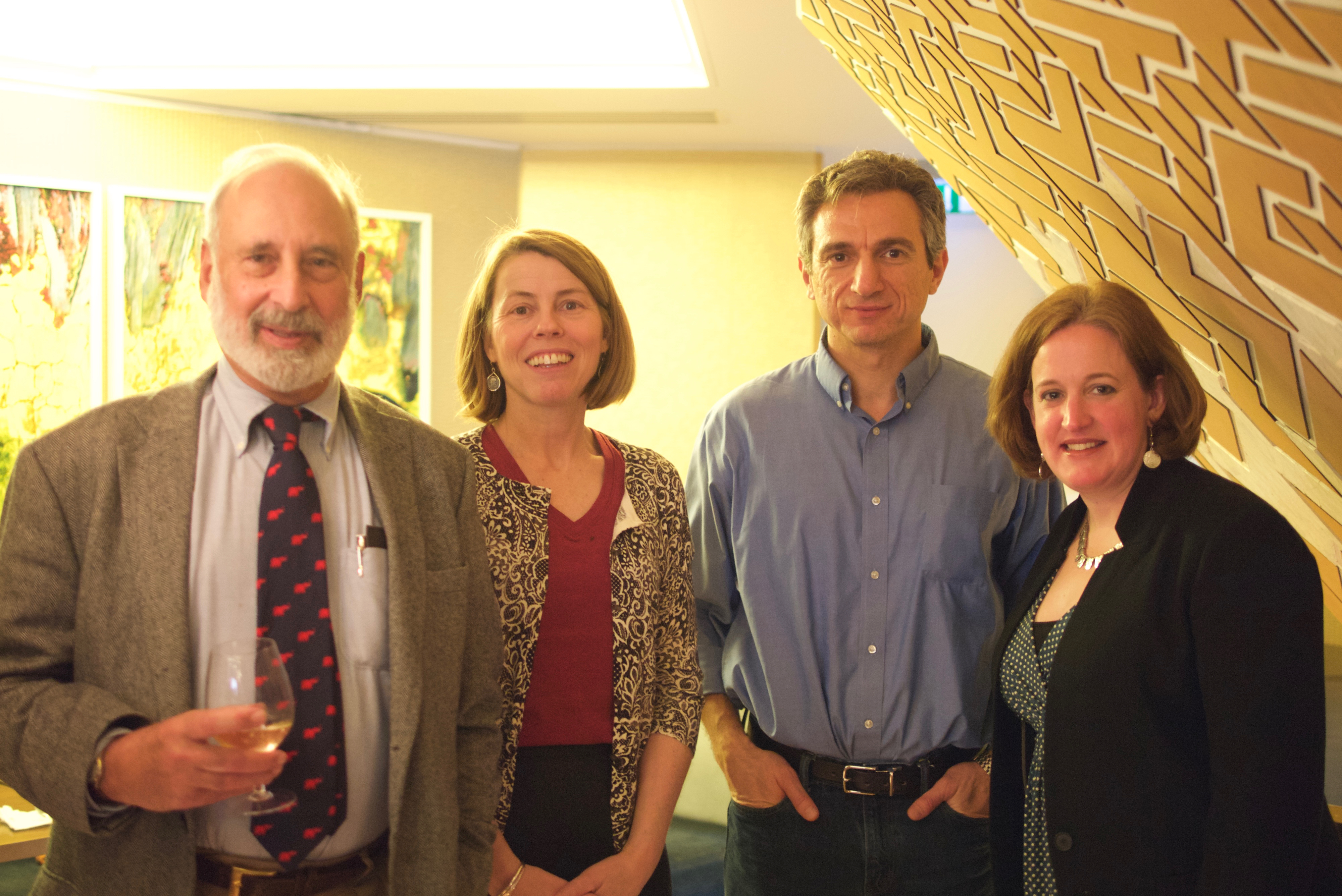
Our fantastic sponsors from Ixxus and the Copyright Clearance Center.
All five panellists agreed that the defining challenge for content providers in 2018 is the competition for the customer’s time. “Everyone is competing over time,” said Jason Haynes, “but people are also changing the way they spend their time.” He brought up the example of Twitch, the definitive live-streaming platform for sports content. “In 2017,” he explained, “Twitch carried three billion minutes of people watching other people play games, boasting fifteen million active viewers per month.” These are staggering statistics, and they contain potentially vital lessons for the publishing industry. “Platforms like Twitch create vibrant communities around their content,” continued Jason, “encouraging lots of social interaction.”
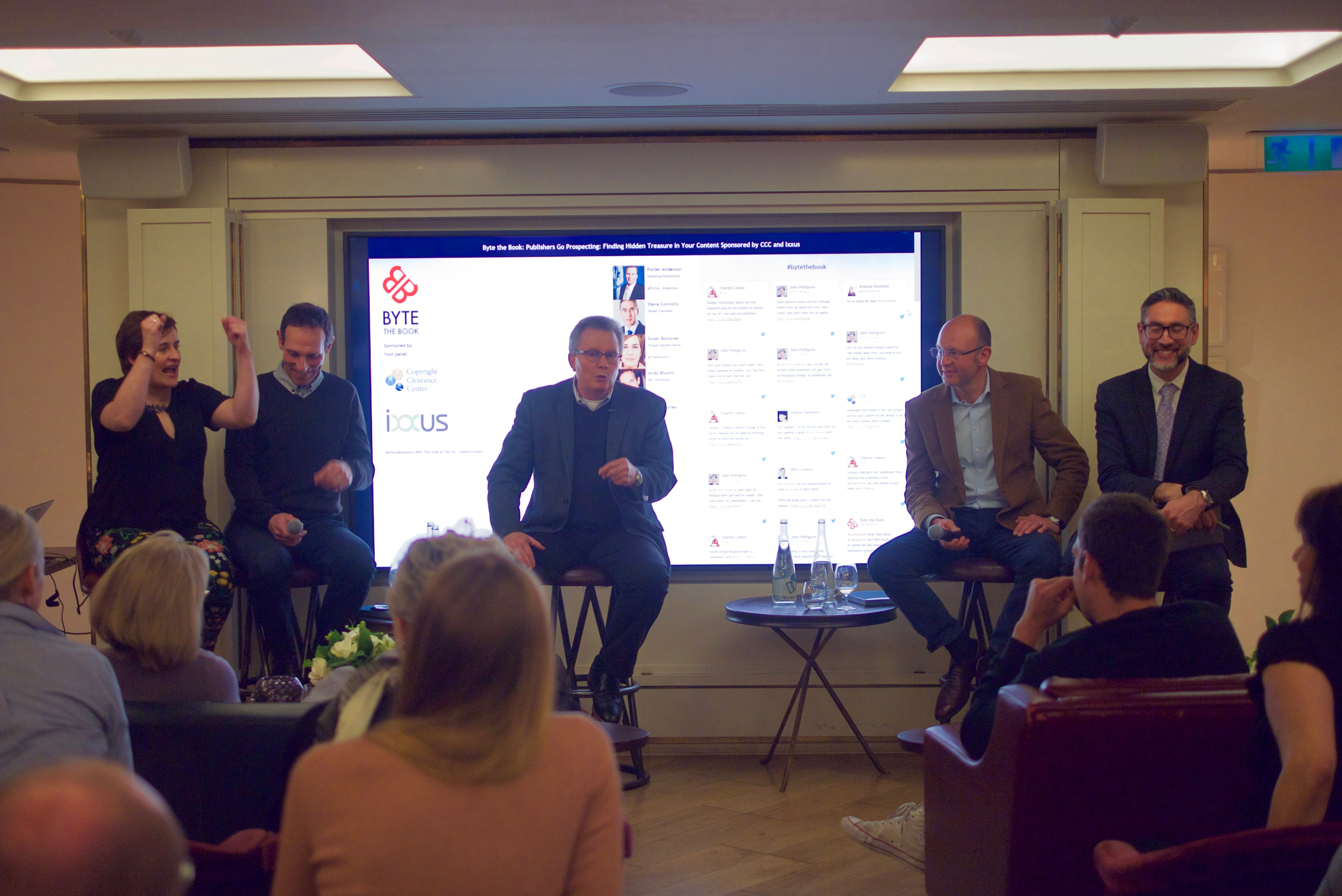
Animated discussion from the panel.
Steve Connolly, meanwhile, spoke of the importance of trend-spotting, highlighting the recent audio boom - enabled by the invention of the smartphone - as a prime example. “Being a futurist is difficult,” he said, “but the rewards can be enormous. Love ‘em or hate ‘em, Amazon are brilliant at noticing trends early on, and they make a special effort to understand their consumers. We’re not so good at that in publishing.” Steve admitted that Amazon’s massive financial brawn allows them to take chances most companies would shy away from; however, he concluded, “when they win, they win big”.
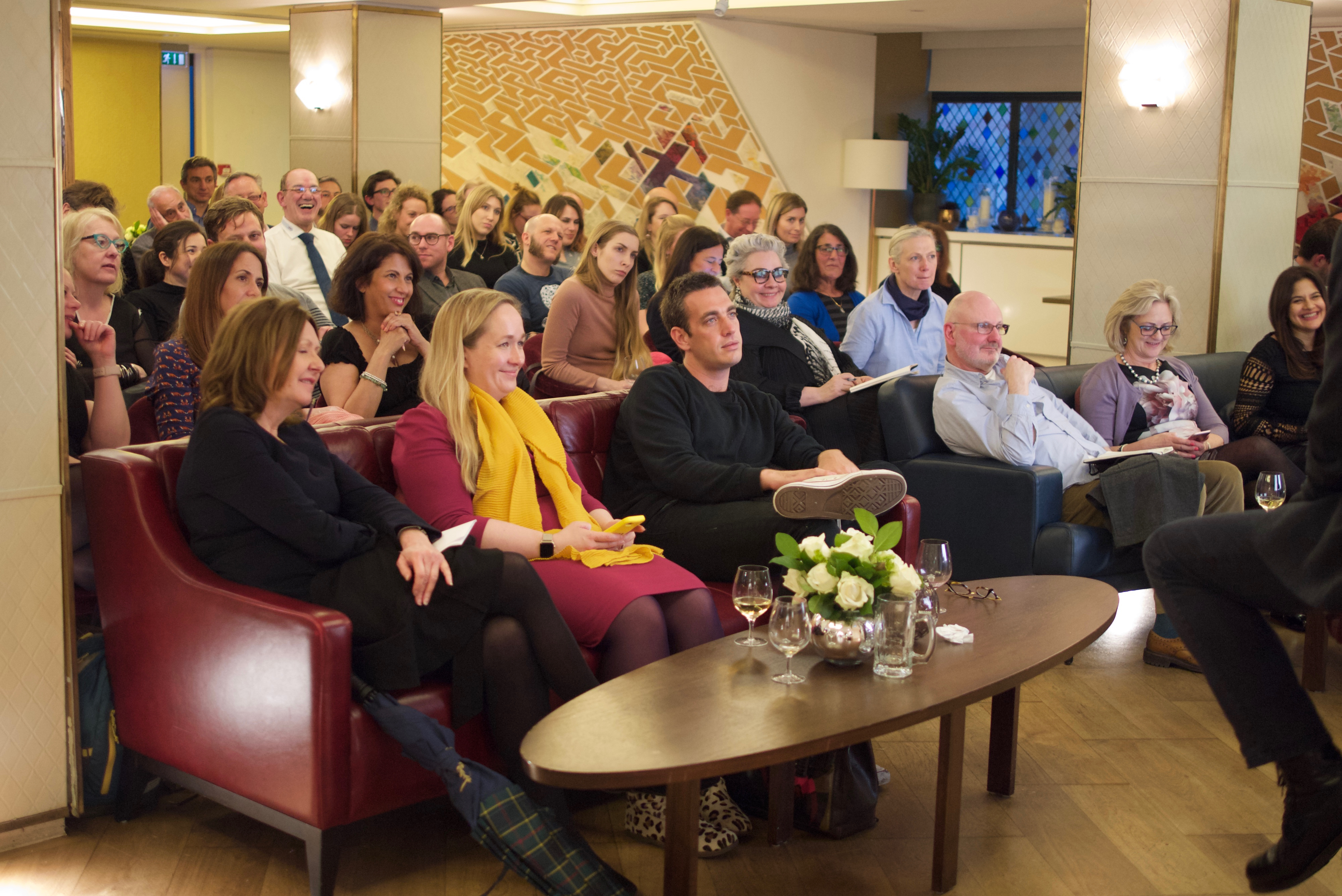
A rapt and amused audience.
So, asked Porter, what’s the key challenge for publishers in this crowded content marketplace? “Branding and discoverability,” replied Andy Blustin, who has worked on beloved BBC shows from Dr Who to Planet Earth.“When it comes to directing consumers to content they’ll enjoy, the power of the brand is all-important.” He also pointed to the central role that data plays in today’s entertainment industry. “Access to data is everything,” he stressed, “which is precisely why Netflix and Amazon ask you to sign in before using their services.”
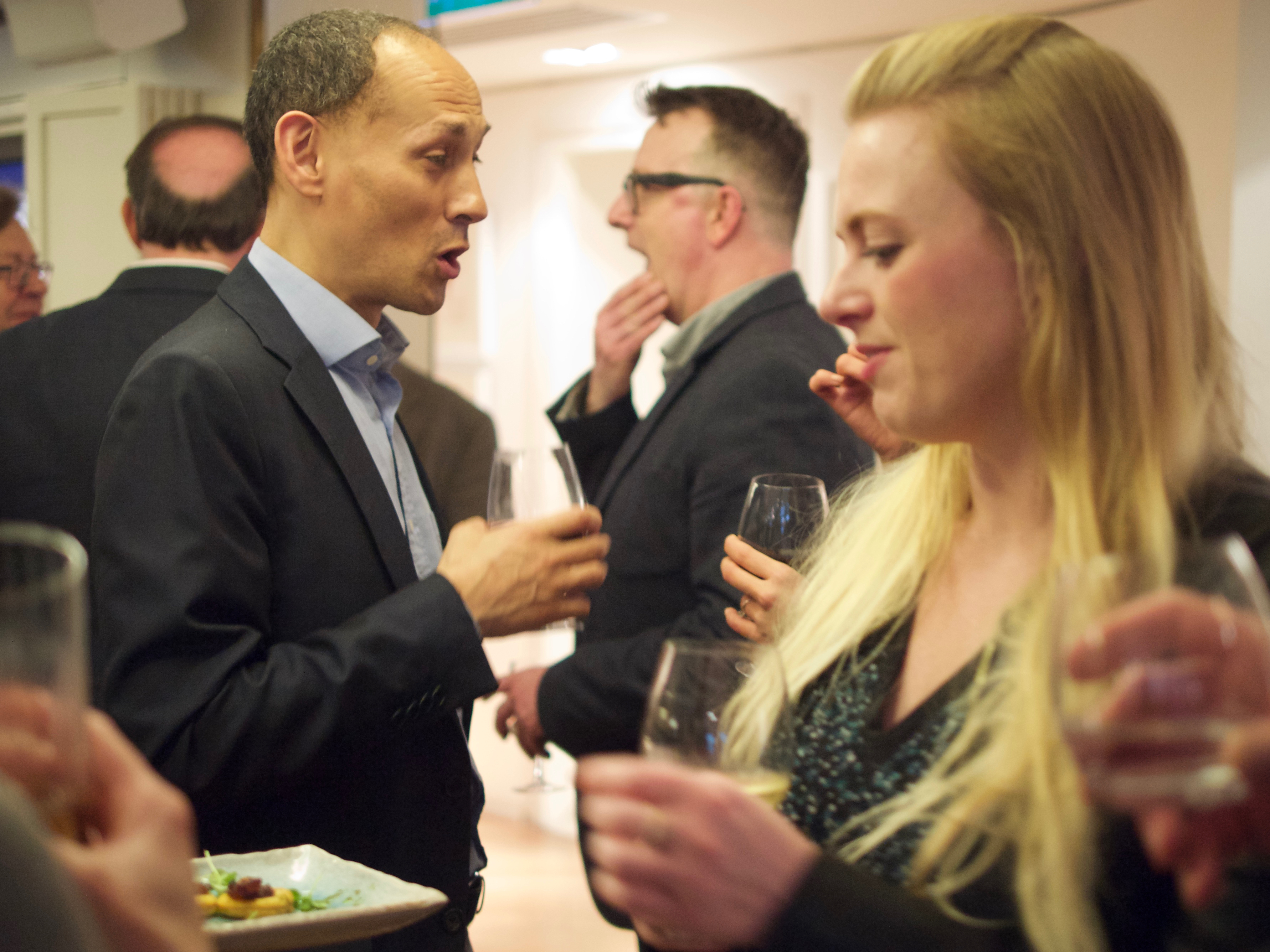
There's always time for networking at Byte The Book, this time with drinks and canapés sponsored by Ixxus and the Copyright Clearance Center.
In conclusion, the world is changing, and if the publishing industry wants to compete with the heavyweights, we need to change with it. Or, as Porter put it, paraphrasing marketing provocateur Tom Goodwin: “Book publishing is not in the text industry anymore, and it’s not in the reading industry … it’s in the what-do-people-want-to-spend-their-time-doing industry.”
If you enjoyed this report and want to keep up with the latest happenings in publishing as well as network with publishers and authors alike keep yourself posted by visiting our events page here. You can join us from £36 a quarter here
More photos can be found on our Facebook Page
Words by Chris Russell, photos by Annie Poe
At Byte The Book’s March event, sponsored by Clays, Bluebird Consulting’s Heather O’Connell chaired a spirited discussion on the ins and outs of building a successful publishing house. The panel comprised Canelo’s Michael Bhaskar, Wonderbly’s David Cadji-Newby and Kate Wilson of Nosy Crow.

Our wonderful sponsors, Clays (from left to right): Vicky Ellis, Georgina Aldridge and Greg Manterfield Ivory.
The panelists began by sharing their contrasting backstories, revealing how they ended up starting publishing companies in the first place. “I got fired,” explained Kate, “and that’s not a euphemism.” Having been released (with a payout) from her senior job in corporate publishing, Kate suddenly found herself with the freedom and money to try something new, and by the following morning, she had drawn up a tentative business plan for starting her own publishing company in her basement. “You will fail,” asserted her youngest child; but fortunately, they were wrong.

Our fabulous panel (from left to right): Heather O'Connell (Chair), Michael Bhaskar, Kate Wilson and David Cadji-Newby.
Michael, meanwhile, was working for an independent publisher in a “great job that I loved”, and hadn’t been anticipating a career change. When a friend suggested, over a game of pool, that they quit their jobs and start a digital publisher, his response was, “You’re insane; I could never afford to do that.” But the seed was sown, and the idea wouldn’t leave him alone. Similarly, David’s technology-led publisher, Wonderbly - which specialises in personalised books for children - also began as a labour of love between friends, evolving from an “evening and weekends” pub activity into an all-encompassing career. “In the beginning, we thought ‘hey, this might help us pay a bit of our mortgages’, but it turned into a full-time job.”

Justine Solomons takes questions from the extensive and attentive crowd.
Predictably, the discussion soon turned to the issue of investment. Kate was unequivocal: “We had quite a lot of money, and we didn’t have enough. You will never, ever have enough cash to do the things you want to do.” While the panel echoed this sentiment, it was also agreed that not all start-ups have the same cash-flow requirements. “We knew our digital model wouldn’t be as cash-hungry as traditional publishing,” pointed out Michael, who co-founded Canelo with a relatively modest sum of money. “None of us took a wage for the first year, and we relied heavily on our partners, but this meant we could maintain control over our business.” Canelo deliberately avoided chasing venture-capitalist investment, as Michael had seen the companies of various friends fall foul to this approach. “Tech people can’t get their heads around how few copies most books sell,” he said, “and when they realise they won’t be getting a return, they just railroad you out of business.”
Wonderbly’s upfront costs were also comparatively low, thanks to the direct-to-consumer nature of their business. “We didn’t need much cash to get going,” explained David, “but what costs us money in the longer-term is growth. We have to go out and find every one of our customers, because unlike a traditional publisher, we’re not in bookshops.” He even added that, “I’d like to say great storytelling was the secret to our success, but really, it was Facebook advertising.”
The panel wrapped up the evening with some nuggets of advice for aspiring business owners. “Have a brutal clarity on what you’re doing and why you’re doing it,” advised Michael. “When you start something,” said David, “it has to be a mission you believe in.” And finally, concluded Kate, “Make sure you know what you, specifically, bring to the table. Own your story. Or, in another words… don’t try and be a shit HarperCollins” (a soundbite that was on Twitter within seconds!).

Of course, there is always time for networking at Byte The Book. We would like to extend our thanks to the Union Club for hosting us at the last minute after a small fire at The House of St. Barnabas. We had a great time at your lovely venue. Just look at all those lights behind the bar. Thanks again.
If you enjoyed this report and want to keep up with the latest happenings in publishing as well as network with publishers and authors alike keep yourself posted by visiting our events page here. You can join us from £36 a quarter here
More photos can be found on our Facebook Page
Words by Chris Russell, photos by Annie Poe
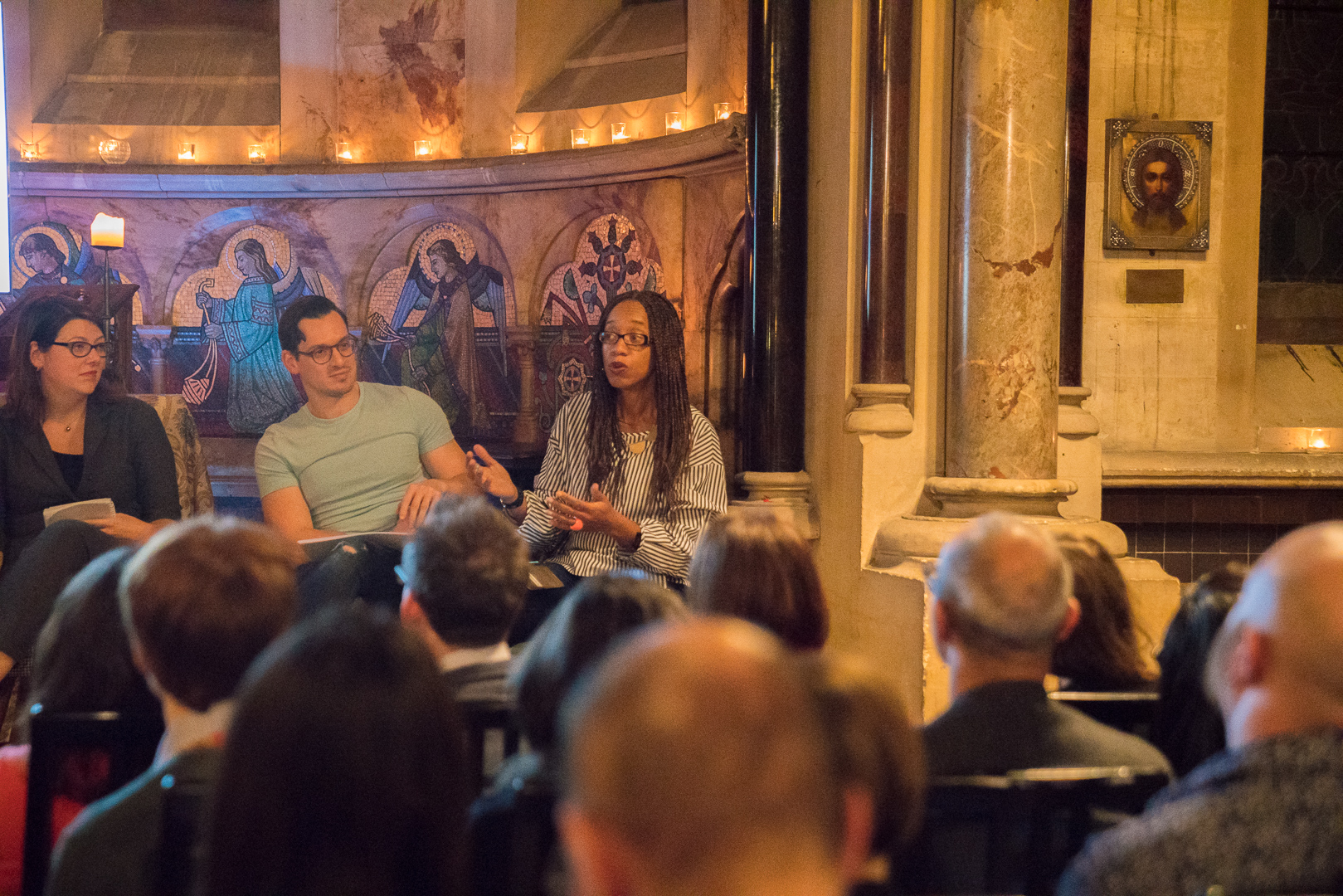
The opening Byte the Book event of 2018 dealt with arguably the most pressing topic in publishing today - diversity. In the stately surroundings of the House Of St Barnabas chapel, chair and literary agent Julia Kingsford led an uplifting conversation between Joy Francis (Words Of Colour), Chris McCrudden (Golin), Sharmaine Lovegrove (Little Brown) and Natalie Jerome (Bonnier Publishing UK).
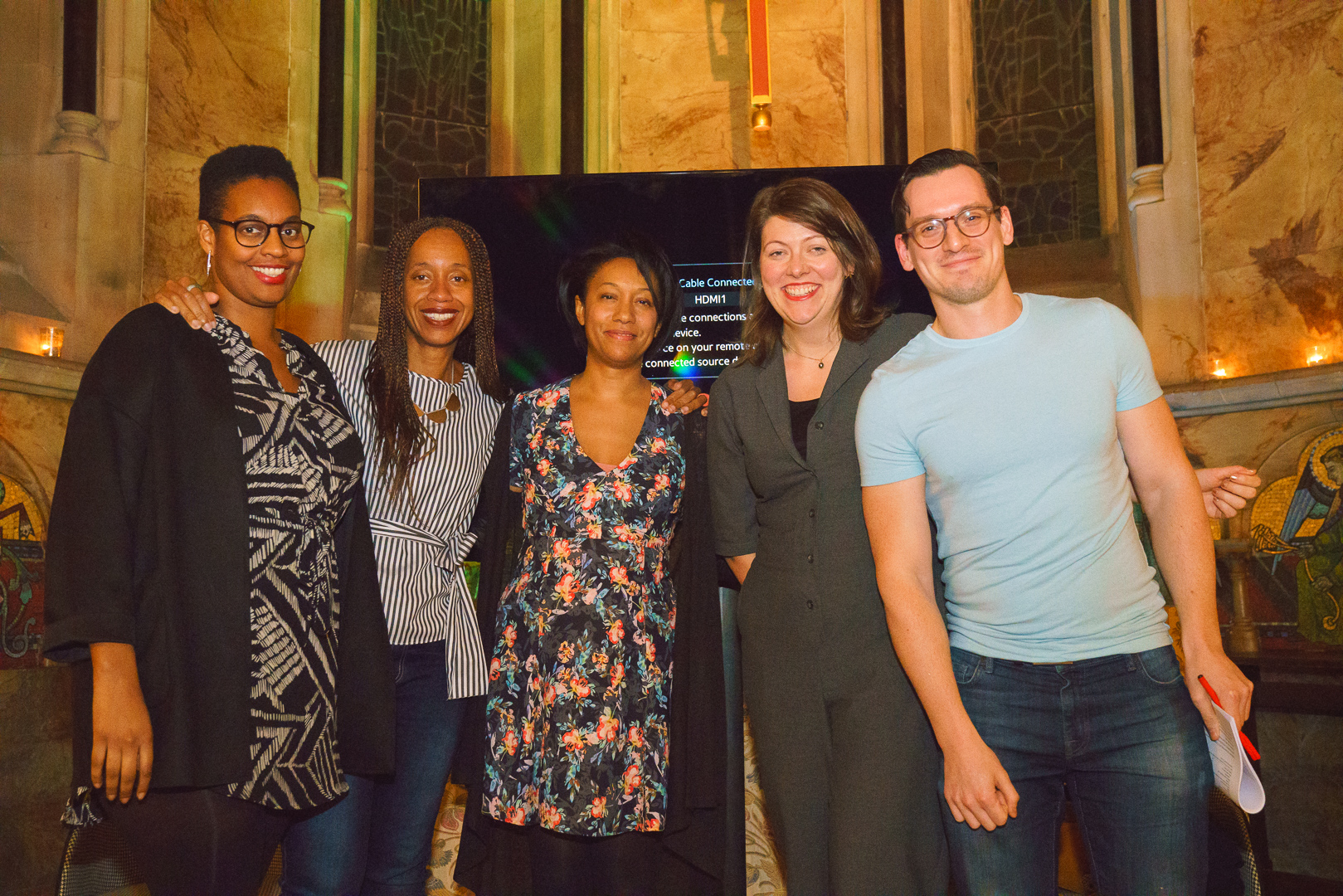 Our panel (from left to right): Sharmaine Lovegrove, Joy Francis, Natalie Jerome, Julia Kingsford (Chair) and Chris McCrudden.
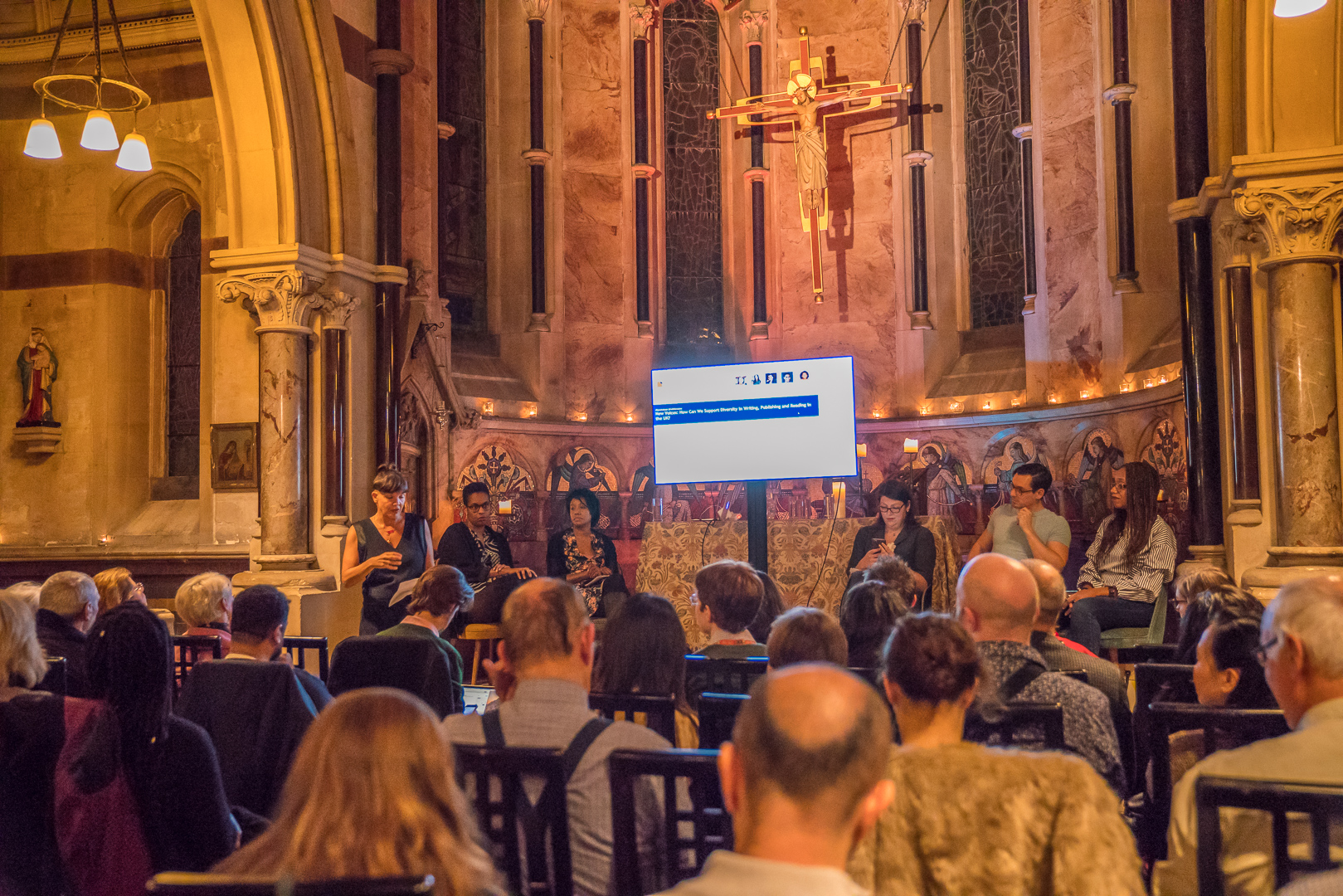 The panel with Justine Solomons and the audience in the spectacular House of St Barnabas chapel
It’s an undisputed fact, continued Chris, that the publishing workforce is not nearly diverse enough, and he offered some startling statistics to demonstrate this. 43% of those working in the industry are from the middle- and upper-middle classes, and of course white people are vastly over-represented at all the major publishing houses. Every member of the panel spoke of their dismay at hearing the tired mantra that “diverse books don’t have a market”; and yet, as Chris revealed, of the UK’s twenty-one million adult readers, studies suggest that nearly twelve million “like being surrounded by people of different backgrounds and cultures” and would welcome books reflecting this preference.
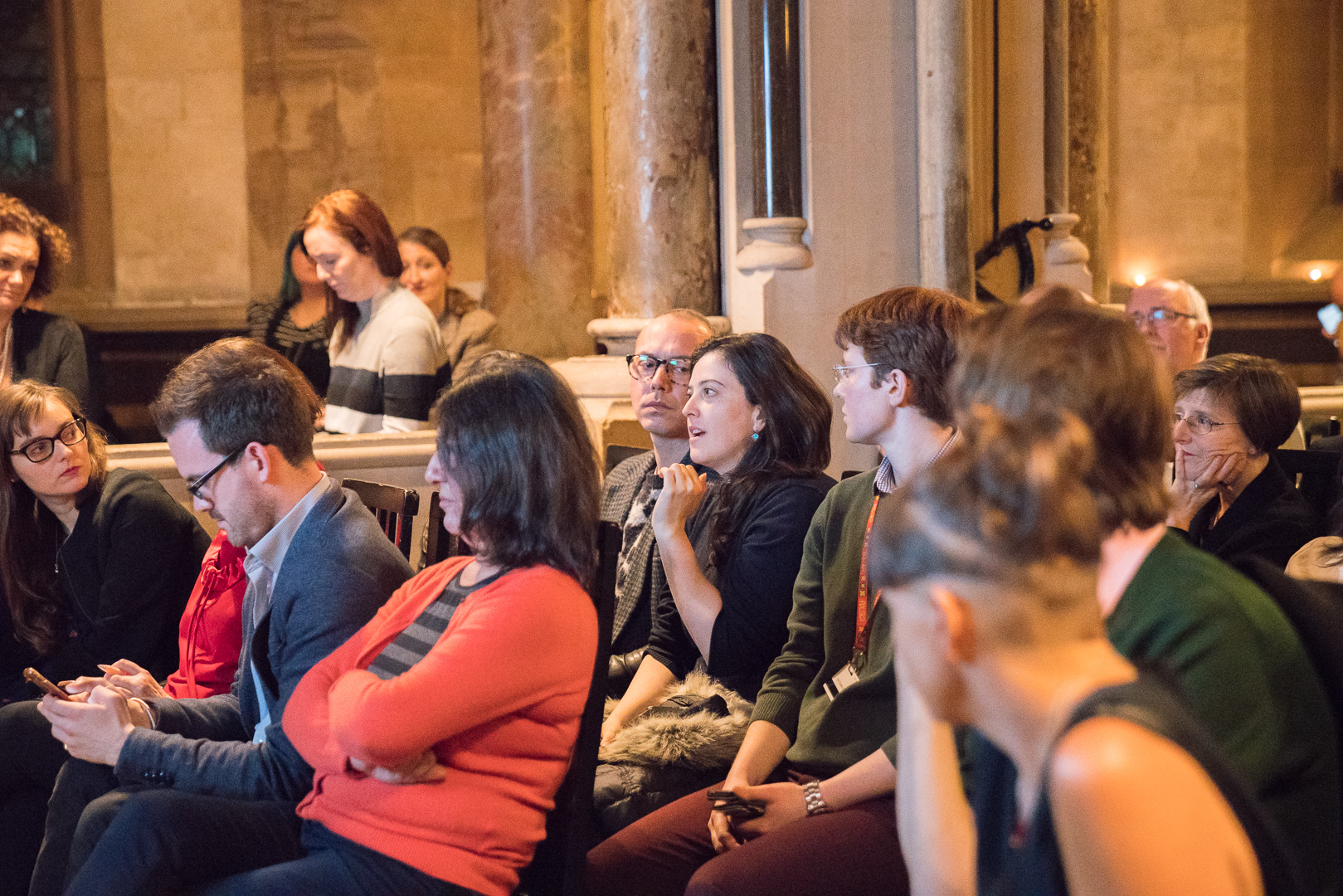 Julia Kingsford encouraged participation, questions and comments from the audience and they were happy to comply.
In other words, as Little Brown’s Sharmaine Lovegrove put it, “the problem is the pipeline”. White writers are picked up by white agents and pushed to white publishers, and the vicious cycle continues. “Readers aren’t to blame for this,” agreed Natalie Jerome, brand and licensing director for Kings Road, a division of Bonnier, “and neither are BAME authors. The issue is the workforce: the monoculture responsible for acquiring new talent.”
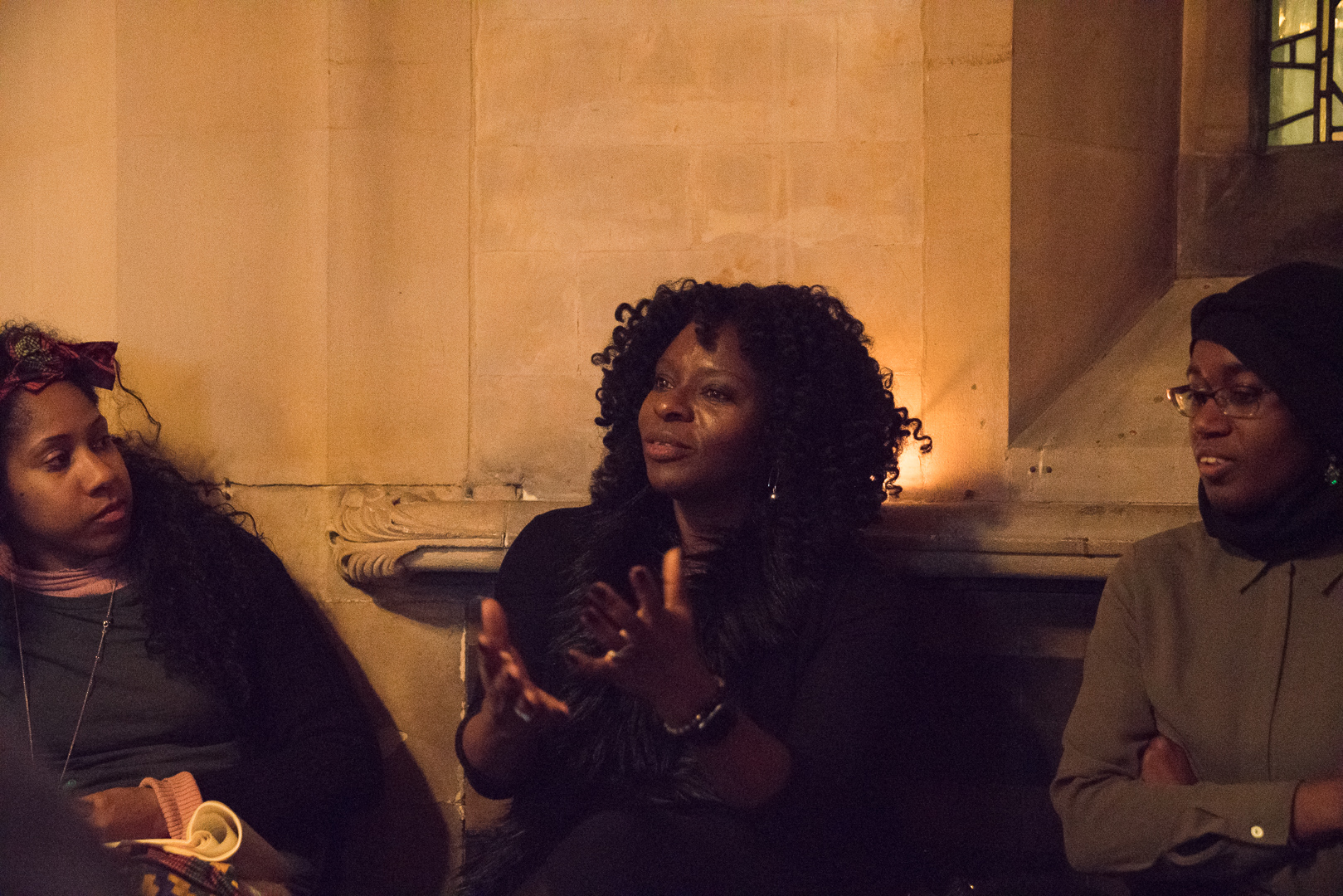
 Joy Francis mid-flow.
What are the solutions, asked Julia, to this systemic gridlock? “It’s as simple as publishers putting their money where their mouth is,” replied Natalie, “and giving young diverse editors money to buy books.” Sharmaine, meanwhile, called for more BAME employees in the workforce. “In the major publishing houses,” she commented, “I am one of only four black women acquiring books. In a division of one hundred and fifty people, I am the only black person.” Joy also pointed out that unpaid internships are a major issue for young people from poorer backgrounds, and this chimed with Chris’ experience, who comes from working-class roots in the north-east. “When I started my last job,” he said, “my boss told me that I might find publishing an ‘uncomfortable’ place to work, purely because of my background.”
 The evening couldn't end without comment from the amazing, Valerie Brandes of Jacaranda Books (centre). Both she and Jazzmine Breary (right of picture), also from Jacaranda Books, spoke of the importance of the independent sector in producing books that the main publishers shy away from. The audience for diverse books is there. It's about getting the books to that audience.
To close the discussion, Julia offered up some encouraging sales figures to debunk the myth that white, middle-class novels are the only books that sell. Between them, she revealed, Nikesh Shukla’s The Good Immigrant and Reni Eddo-Lodge’s Why I’m No Longer Talking To White People About Race have sold a hundred thousand copies in the past year. And if that isn’t evidence of a buoyant market, then surely, nothing is.
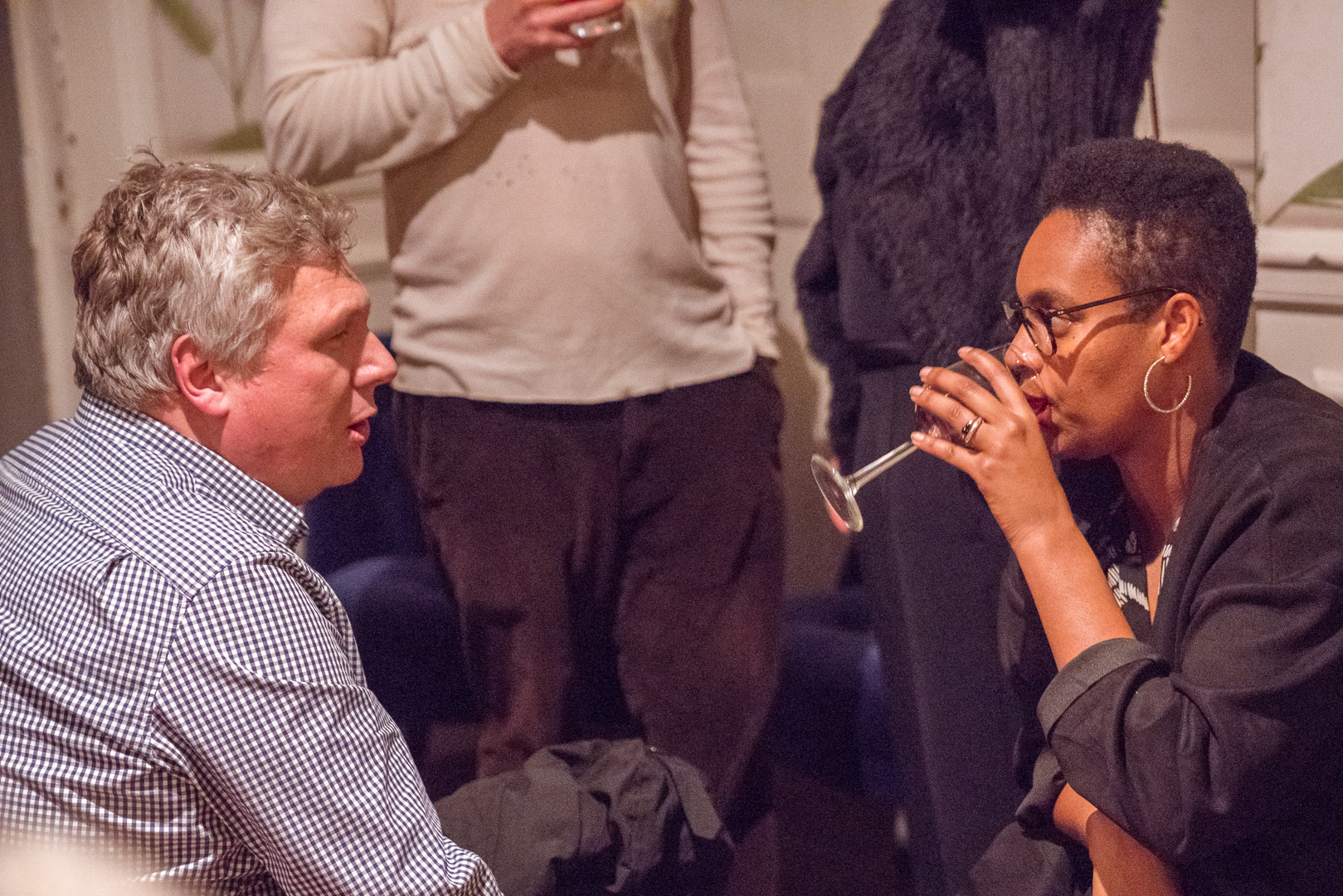 No Byte the Book is complete without networking afterwards.
If you enjoyed this report and want to keep up with the latest happenings in publishing as well as network with publishers and authors alike keep yourself posted by visiting our events page here. You can join us from £36 a quarter here
More photos can be found on our Facebook Page
Words by Chris Russell, photos by Katrina Hopewell.
Jane Tappuni, General Manager of IPR License, chaired Byte the Book’s September 2017 event sponsored by Frankfurt Book Fair, which spread the net wide to examine how British companies can best connect with publishing partners around the world. The panel comprised Alison Barrow (PR Director at Transworld Publishers), Jim James (Senior Trade Advisor at the Department of International Trade) and superstar agent Juliet Mushens, who recently co-founded the Caskie Mushens literary agency.
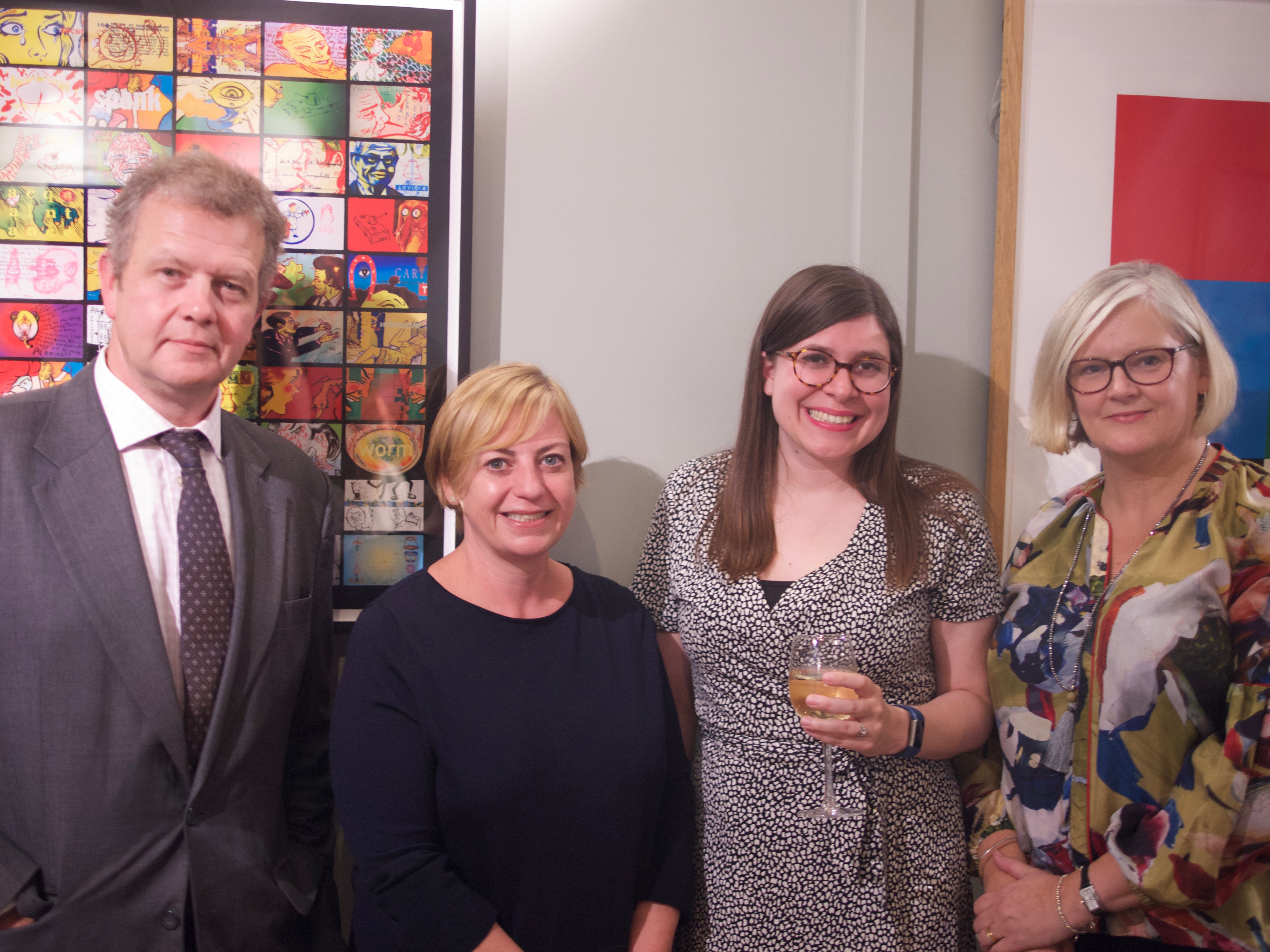
Our panel (from left to right): Jim James, Jane Tappuni (Chair), Juliet Mushens and Alison Barrow.
Within minutes, Brexit had reared its ugly head, and the panellists were soon discussing how the UK’s convoluted relationship with the EU is affecting its publishing trade. Juliet revealed that, with the hammering of the pound, authors’ international advances are dwindling wildly in value, and small, independent publishers that have traditionally relied on Europe’s relatively low printing costs are struggling to meet their overheads. Jim, however, was reasonably upbeat, reflecting that “we are still in Europe, and will be next month, and next year. It is still open to us”. He added that, while a weak pound is far from ideal, it does mean that what we’re selling in the UK has never been cheaper, and therefore more appealing, to foreign buyers.
Our sponsors: Alex Hippisley-Cox of Frankfurt Book Fair
Asked whether the prospect of Brexit had opened up opportunities in non-EU territories, Alison reflected that “it’s too early to say … no one can predict the future”. However, she did reveal that Transworld has recently seen huge growth in the emerging markets of China, Korea and India, and this was echoed by Juliet. “There’s lots more money in Korea,” she commented, “and they’re especially interested in non-fiction technology books”. America remains the biggest non-UK market, of course, and Juliet confirmed that Caskie Mushens are still landing consistently bigger deals there than in any other territory. “For heft and clout,” agreed Alison, “America is the place”.
The concept of world rights was next on the agenda, with Alison stating that, for a publisher, securing world rights to a brand is always an appealing prospect. She argued that, while such deals might not be suitable in every instance, they can bring significant benefits to an author. A world rights deal means consistency across the board, with international timelines synchronised and complex global conversations - which otherwise might be difficult to manage - joined up. Unsurprisingly, as a literary agent, Juliet fought the opposite corner, but she did concede that global deals are beneficial in certain situations, such as with heavily illustrated (and therefore high-cost) works.
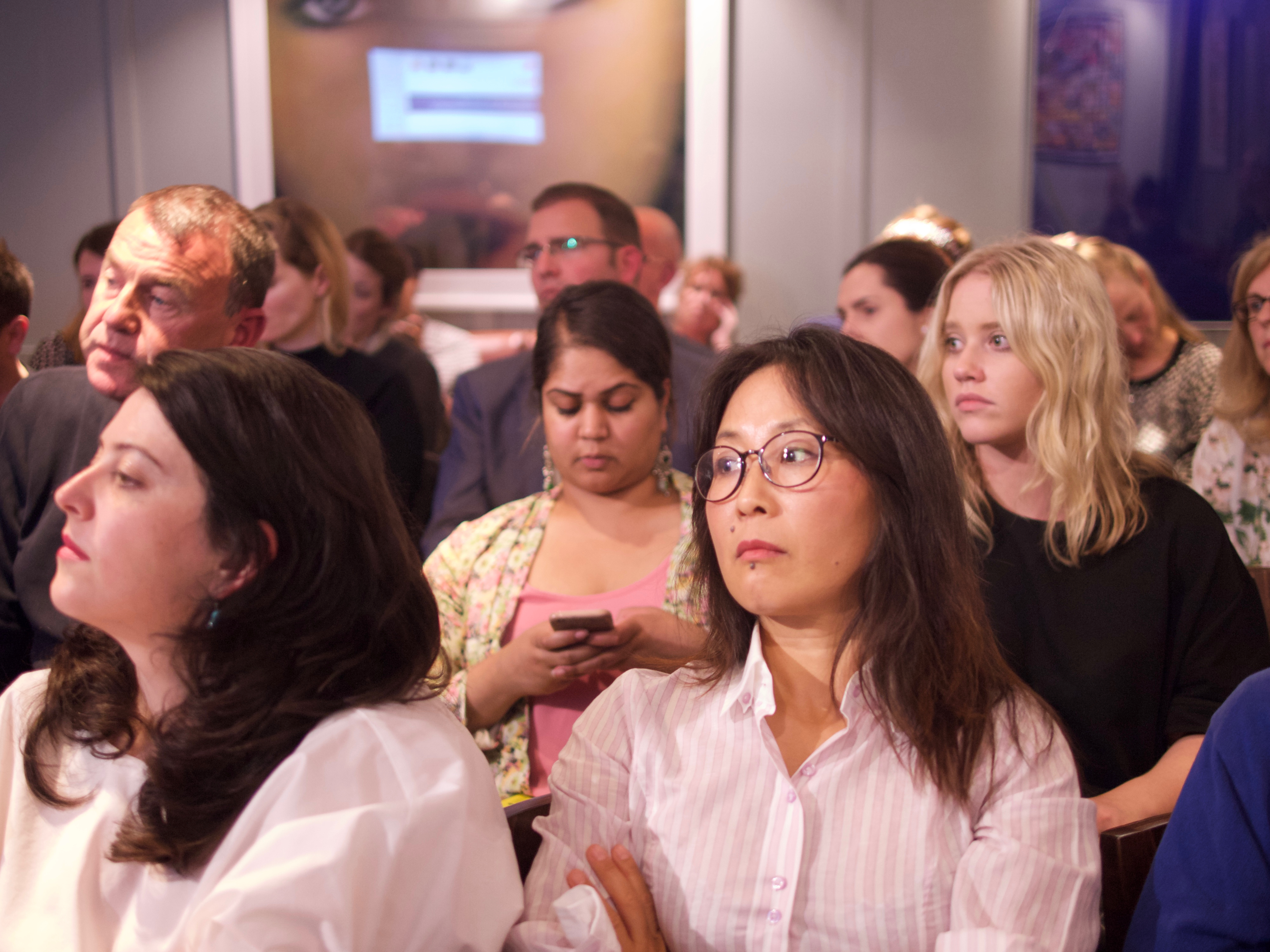
A rapt audience, listening or contributing to the twitter debate #bytethebook
Finally, the panel tackled the tricky issue of copyright and intellectual property. Jim stressed that IP is a content creator’s most valuable asset, cautioning that “whatever you’re doing to protect it, you should do more”. He explained that, while some countries and territories are respectful of copyright ownership, there are plenty that aren’t, and Juliet cited Iran as an occasional offender. She will sometimes hear from Iranian publishers, she said, expressing an interest in one of her client’s books with the caveat that “if you say no, we’ll publish it anyway”. With this in mind, ruthless transparency and constant communication with foreign partners was recommended all round.
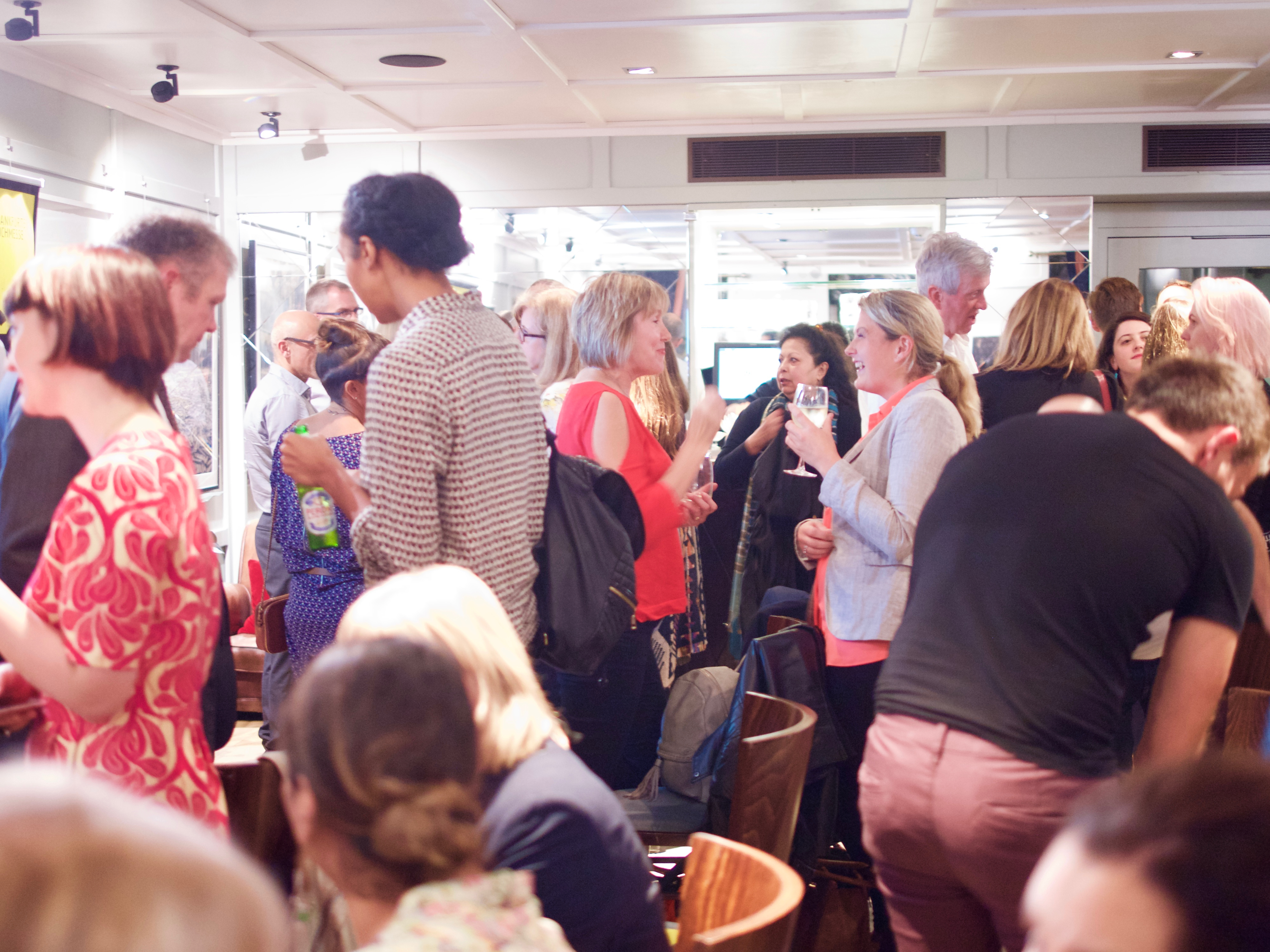
Networking is always fun at Byte the Book
Will Brexit continue to rock the boat for UK publishers? Absolutely. However, as Jim put it, “the UK is still in demand around the world, and we sometimes underestimate what might be of interest to other territories”. Which, of course, is what makes us British in the first place…
If you enjoyed this report and want to keep up with the latest happenings in publishing as well as network with publishers and authors alike keep yourself posted by visiting our events page here. You can join us from £36 a quarter here
More photos can be found on our Facebook Page
Byte the Book members, Wonderbly, previously known as Lost My Name, have created a tantalising, personalised adventure for children in Roald Dahl's My Golden Ticket, produced with The Roald Dahl Literary Estate. Keep reading for news of a Byte the Book 15% discount.
Children love personalised books. Seeing their name in print, as part of the story, is definitely an incentive to get them reading and when you combine that with a trip to Willy Wonka's Chocolate Factory it is no surprise that Roald Dahl's My Golden Ticket is a winner. My 7-year-old's description of the book was simply, 'Awesome.'
Not only does every reader get a personalised message from the person giving them the book, they also get to have a personalised adventure with the Fizzical Effects Machine in the Invention Room, discover the fruit origins of their surname in the Toffee Apple Orchard and ultimately create their own Wonka Bar whose ingredients are beautifully sung out to them by a group of happy Oompa-Loompas.
There are disclaimer forms, records and accident reports to sign, maps, labels and leaflets as well as lots of creative visual word placements to make the book filled with plenty of gems little people will want to keep on returning to. And, if you want, you can order your book to come smelling of candy.
Roald Dahl's My Golden Ticket was a huge success in my family. It makes a great and reasonably priced gift at £19.99 for the softcover edition and £27.99 for the hardcover edition. However, for Byte the Book subscribers, Wonderbly are offering us a special 15% discount on all of their products. Simply add the code bytethebook at the checkout. Happy reading!
Reconciliation, the second novel by Byte the Book member Guy Ware, is a page-turning quest to uncover the real story of the family spy; a story that rewrites both past and present.
Reconciliation takes the transcript of a diary from the Second World War, written by an English spy describing his deliverance from occupied Norway, and creates a delightfully playful novel about the difficulties of accounting for past and present, fact and fiction, in national and individual identity. Set in the 1990s during the Iraq war as well as the 1940s, one woman’s grandfather’s diary becomes the subject of several different retellings and reframings that never quite seem to grasp the skirts of truth, constantly questioning a reader’s grasp of authenticity and our desire for fiction to say something true.
The novel feels wildly relevant, questioning the wisdom of all governance and the clarity of individual allegiance to a political ideology. It forces us to accept a reconciliation between history as fact and history as interpretation. Some things we can only ever speculate upon, but speculation is attempted empathy, a compromise that allows us to move on.
Because the novel progresses from one seemingly authentic account of the transcript’s discovery and subsequent exploration to another, we are forced to continue to question our expectations of narrative. Outlining the plot would spoil the novel, but let’s just say there is enough intrigue in the past and present, as well as a thoroughly forensic exploration of the minutiae of daily living - the reheated ready meals, the workplace banter, a clear vision of Scotland, Norway, Cambridge and London, as well as plenty of whisky - to create a page-turning novel that has the reader constantly on the hop. That’s what makes it such a delight. You’re never quite sure where you are, and yet all of it feels relevant, meaningful and real. Literary critics would have a field day with this novel, despite it also being a book you would be happy to read in one sitting on a long journey or tucked up in a comfy chair by a warm fire.
Nicholas Lezard called Guy Ware’s previous novel, The Fat of Fed Beasts, ‘The best debut novel I have read in years’. Reconciliation consolidates Guy Ware’s reputation as a writer whose observations of modern life are witty, precise and provocative. It’s brilliant. Read it and see for yourself.
This book review was written by Rebekah Lattin-Rawstrone. See her website for details of a Reconciliation book giveaway. Published by Salt on the 5th October, you can buy Reconciliation here.