Posted by Maleeha Mir on 10 July 2026, in Event reports, News
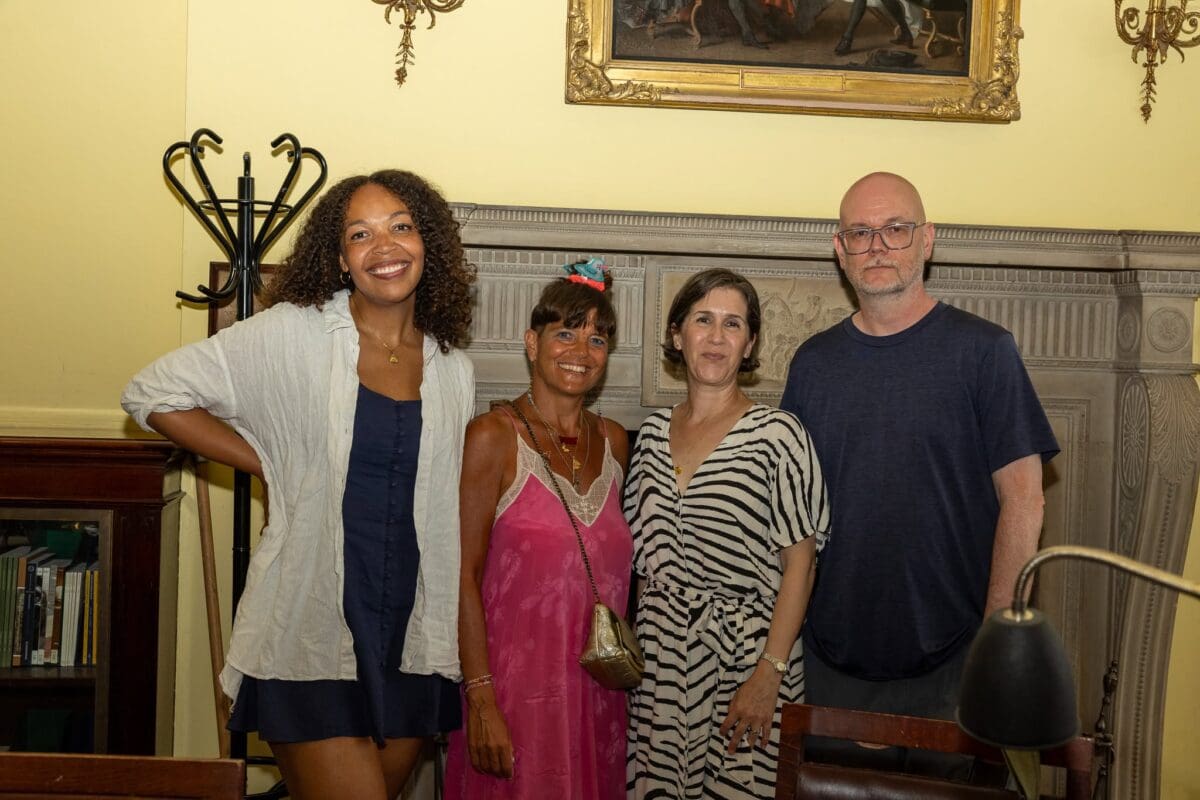
Photos by Phoebe Ireland & Daniel Solomons, Words by Kate Delamere
You can listen to an audio recording of this event via this link.
A heatwave did nothing to deter scores of budding authors from attending a Byte the Book event to learn how to get published.
Up to 100 people drank up advice from a panel of experts on the secrets of the submission process as well as forged new connections at London Library last night. (9th July)
Publishing director of Dialogue Books Hannah Chukwu, literary agent Julia Silk from Greyhound Literary, and publishing polymath Scott Pack were in conversation with Byte the Book director Justine Solomons. They revealed the behind-the-scenes processes and machinations of the industry to help writers prepare for the next stage after finishing their manuscripts.
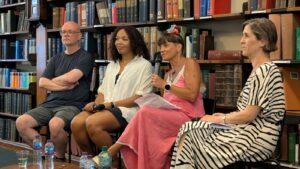
Our panel from left to right: Scott Pack, Hannah Chukwu, Justine Solomons, and Julia Silk.
Scott Pack has spent more than two decades in the book world as editor, publisher and writer. Previously head of buying for Waterstones, he’s also worked for big and small publishers including seven years running an imprint of HarperCollins. His latest book is Tips from a Publisher, a guide for new and emerging authors and he teaches the intricacies of submitting to agents and publishers on The London Library Emerging Writers Programme. He is also one of the specialist subject question writers for BBC's Mastermind.
‘You can have a well written story neatly plotted but it will struggle in the marketplace. Or you can have not the finest piece of writing in the world that sells. All people want is a story well told. It’s my job to help people make their manuscripts read as well as they can and make their prose better!’
Julia Silk has been an agent for fiction and non-fiction authors at Greyhound Literary for 10 years. Prior to that, she worked as an editor and bookseller, and most recently a crime publisher at Orion, an imprint of Hachette.
She confessed she’s inundated with submissions and usually takes three months to get back to an author if she’s interested.
‘I get between 30 to 50 a week. I don’t get back to people if I don’t want to take it further. But I don’t mind being nudged after three months. I totally get why hearing nothing is frustrating. There’s a bit of a mythology around submitting to agents. Do it in batches – seven or eight and wait for feedback, then work on it if useful then send out to the next batch. If you hear nothing back, then query your sample pages.’
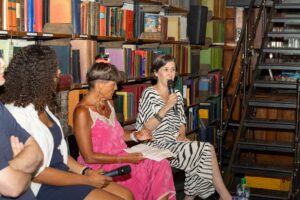
Julia Silk offers her unique perspective as a literary agent, sharing the realities of reviewing countless submissions from aspiring authors at a literary agency.
Hannah Chukwu’s a multi-award-winning publishing director at Dialogue Books, where she leads the literary team across fiction, non-fiction, poetry and classics, with a focus on publishing underrepresented voices. Prior to joining Dialogue, she commissioned at Hamish Hamilton, where she also edited Five Dials magazine, founded the Black Britain: Writing Back series with Bernardine Evaristo, and was the policy and campaign consultant for the curriculum change project Lit in Colour, in collaboration with the Runnymede Trust. She’s a Trustee for education charity The Brilliant Club.
She stressed that it’s important writers get comfortable with the pitching process.
‘I often say to writers it’s a vulnerable experience pitching yourself to agents. The better you can hone a good pitch, the better it is further down the chain. Agents are specialists working across a couple of different genres and know all the right editors. They send it to me, then I also pitch it to my editors and a wider team, to determine how much we want to offer for the book and what the campaign will look like. This can happen in a couple of weeks if it’s a competitive situation or up to a couple of months if not.’
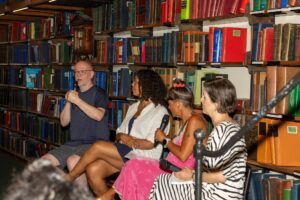
Scott Pack discusses how authors can use different types of beta readers to refine and further develop their writing.
Julia said that it is not necessary to edit your book professionally before submitting to an agent.
‘If someone says their manuscript has been professionally edited, it doesn’t mean much to me. It could be structural, developmental, a copyedit or a light touch edit. However, if someone has been on a mentoring scheme that shows they have a long-term consistent practice and tells me they’re getting better and better. Writers work a long time on their crafts before publishing.’
She said it would benefit writers to self-edit.
‘Keep the reader in mind, think about what sits next to your book in the market and what the point to it is. What’s the point to this scene, this dialogue, this chapter. Everything needs to earn its keep.
‘I essentially want something that makes me turn the pages, that keeps me in that world, that I can’t put down.’
Scott added: ‘One of the biggest mistakes an author makes is they send their manuscript to an agent because they’re sick of the sight of it. That’s not the reason to send it out. If it’s not ready, it’s not ready.
‘However, an agent is not looking for perfection, they’re looking for potential. You do not need every line to be perfect. Get quality feedback from a bunch of different people before you send it out. So, you can make your work better and more commercial.’

Hannah Chukwu shares her experiences as a publisher, offering insights into the editorial processes that typically take place within a traditional publishing house.
Dialogue Books' champions underrepresented authors.
Hannah explained: ‘At Dialogue we publish across class and race, and under-represented voices in this country. Publishing is an incredibly privileged world, generally white and upper middle class and a traditional industry. But I’m in this industry because I believe it’s important there are new voices. I’m waiting for the voice I’ve never heard before, that causes fizzing in the brain. That’s what I’m looking for - that authentic story. So please keep writing and send your work out to agents.’
Writers of all ages and backgrounds attended the event in a library packed with one million books on 17 miles of shelves. The charity was founded in 1841 to help people write and past members include eminent writers such as Virginia Woolf, George Eliot, alias Mary Ann Evans, and Charles Dickens.
Justine launched Byte the Book in 2012 to connect authors with agents and publishers. She said: ‘The event was a great success. Not only have we connected more authors but the important thing is for everyone to keep writing and networking!’

Our audience asked insightful questions and thoroughly enjoyed our live panel, held in the inspiring surroundings of The London Library.
Thank you to The London Library for hosting us!
You can find many more photos from this panel from our online album 'Byte the Book x The London Library: How To Submit and What Happens Next?' here!
If you're not already a member of Byte The Book you can join us from £30 a month here.